
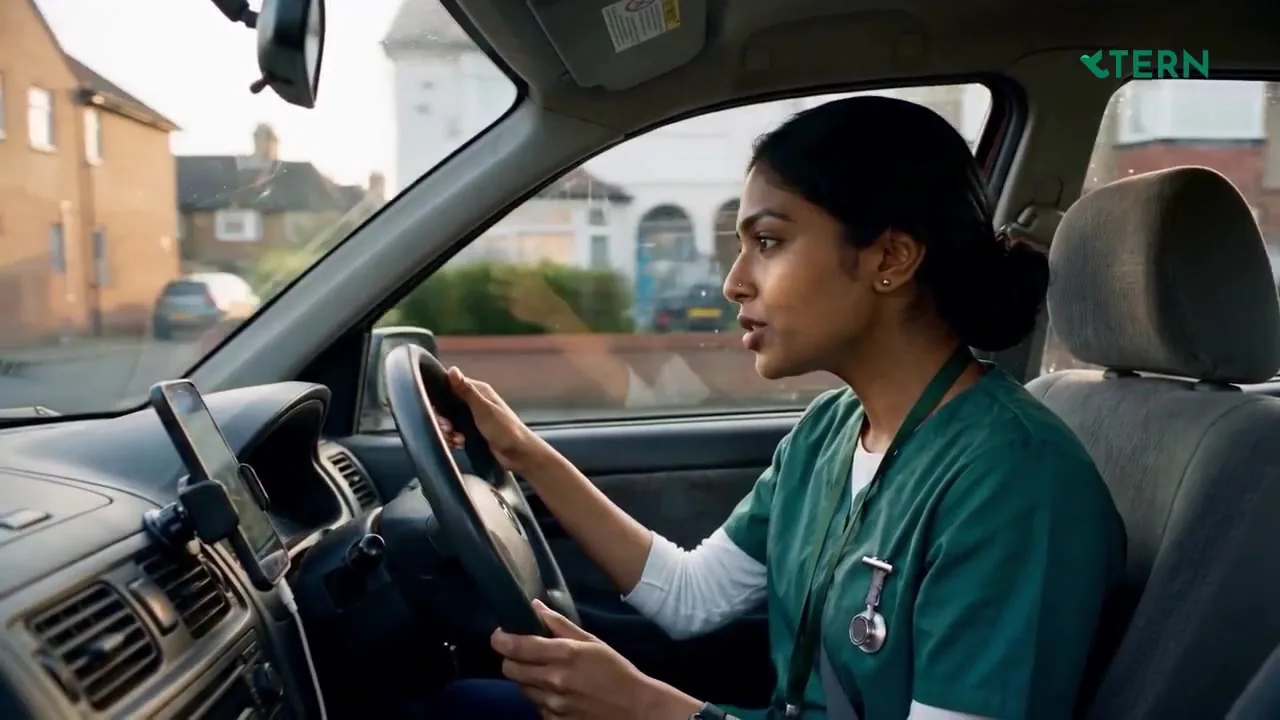
On the road · before the visit
The next visit, already in view.
Anna, the nurse’s AI companion, brings the visit information by voice. Care plans, visit information and routes are easier to reach. Less hunting for the next detail.
More clinical time for nurses.
More care, closer to home.
We’re building healthcare at home around the nurse and the patient. CareOS and AI employees take on the work around care, so clinical teams can reach more people across wider geographies.
 The human side of every visit

Anna takes the notes.The nurse stays with the patient.
A real care operation today, with local care teams in Germany and the UK. A model designed to give nurses more clinical capacity and reach more people, without multiplying the work around every visit.
Local care teams, backed by the same AI-native model and international workforce engine.
TERN’s company-reported position in Germany.
Before the visit, during the visit and after the shift: the same care team, backed by an AI team.
Anna, the nurse’s AI companion, brings the visit information by voice. Care plans, visit information and routes are easier to reach. Less hunting for the next detail.
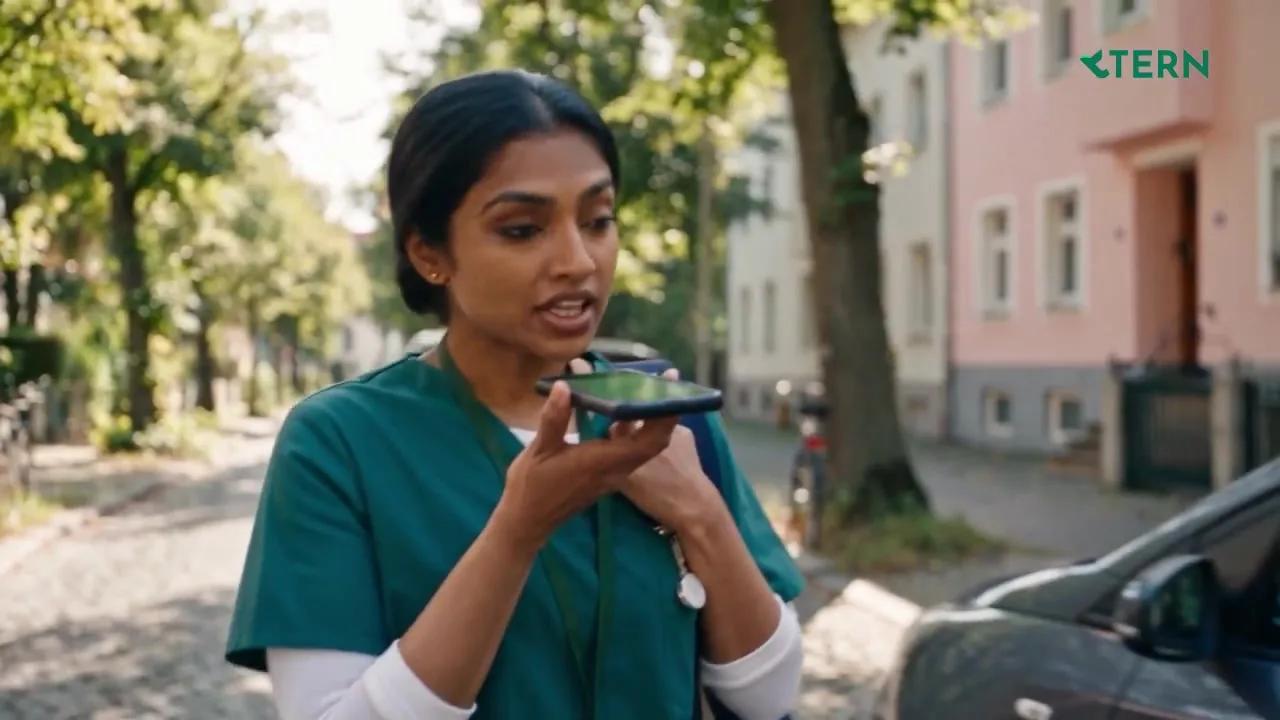
Voice support and documentation help keep eyes and attention on the person, not the screen. Documentation support travels with the care team.
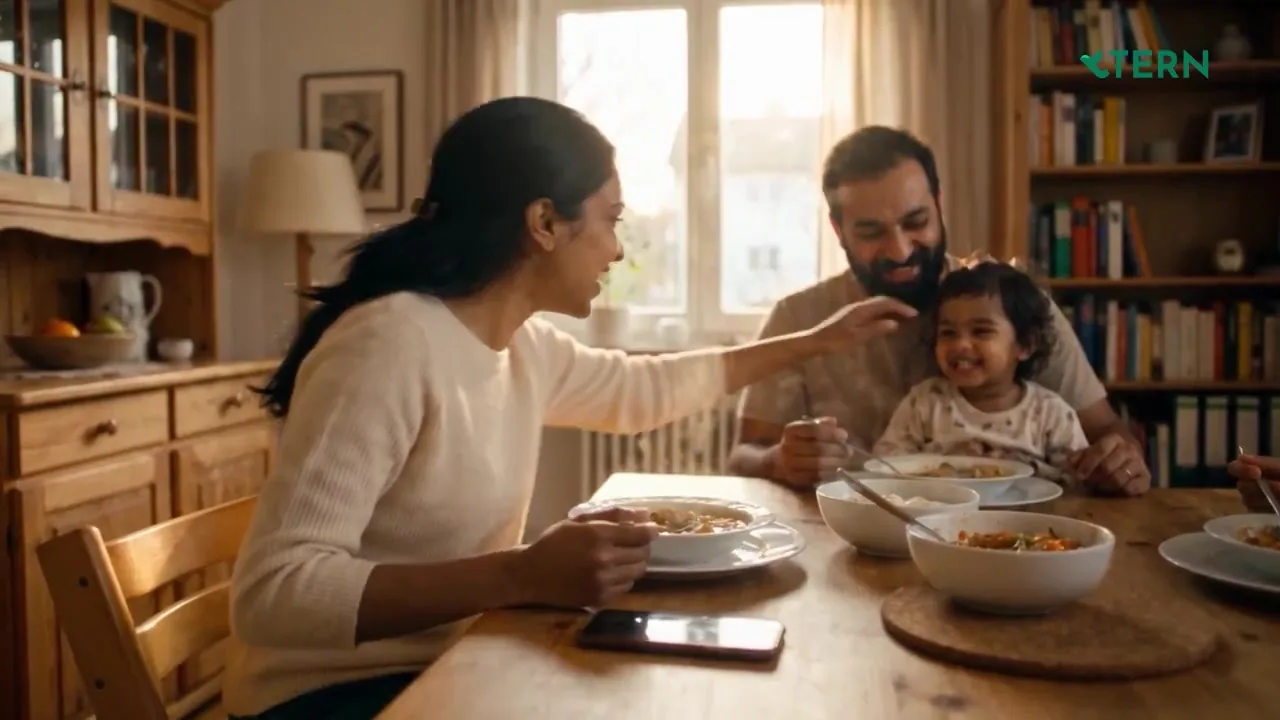
The aim: less work carried beyond the working day. Routine calls, updates and coordination are handled around the nurse. People take clinical decisions and exceptions.
CareOS takes the admin off the day and routes the visits more densely.
Not AI added to old care software. Eight layers, from the models underneath to the nurse at the bedside on top.
The right model for each task, behind one gateway with fallback across providers, so no single provider is a point of failure.
Multi-model routing · fallbackShared orchestration, memory, evaluation and guardrails that every AI employee runs on.
Orchestration · memory · evals · guardrailsCalls, visits, records and operating data brought together in one place the AI employees can act on.
Care and operating dataCare plans, clinical guidance and local practice, available at the point of care.
Clinical and local knowledgeWork that used to take phone calls and forms runs as connected steps, from intake to billing.
Intake · scheduling · documentation · billingVoice, phone and screens where nurses, families and care managers meet the AI employees.
Voice · phone · appAccess control, audit trails and human sign-off built into every layer.
Controls · audit · sign-offOn top of it all, our nurses at the bedside. The one part of care that stays human, with more of the day back for patients.
Nurses · care managers · familiesThe right model for each task, behind one gateway with fallback across providers, so no single provider is a point of failure.
CareOS connects the operation. Named AI employees each take on a real job, from answering a family to documenting a visit and helping the care-service manager run the hub.
More clinical time. Less paperwork.
The nurse speaks the visit note. Anna supports documentation, EHR entry and access to care-plan and clinical information.

Answer the family. Protect the care visit.
Nora answers routine calls and care enquiries, handles intake and family updates, and brings urgent cases to people.

See the whole hub. Keep nurses on care.
Viki brings live hub information together. Insights and early warnings help the manager spot what needs attention and coordinate the team.

A connection when the nurse is elsewhere.
Conversation, check-ins and care memory support the person between visits. Felix can notice changes in mood and wellbeing and alert the care team.

Practice with confidence. Arrive prepared.
Sophie supports German practice and workplace and cultural scenarios. Human teams assess readiness; technical certification support is next.

Support around care. Hands-on care stays human.
An assisted-living pilot explores monitoring, engagement and practical support. Intensive care at home is next. Nurses keep responsibility for body-contact care.
And more. Further AI employees handle billing, payroll, scheduling and compliance, with more being added on the same CareOS foundation.
Care plans, claims, rosters, routes, records and the AI team work from one operating system, rather than disconnected tools.
Character portraits and pilot imagery come from TERN materials. AI supports care professionals; people remain responsible for clinical care.
One model across personal care, skilled nursing and intensive care at home. The patient does not have to fit the limits of a basic-care provider.
Personal care and practical help with daily life, delivered in familiar surroundings.
Independence at homeQualified nurses, care plans and ongoing clinical support as care needs become more complex.
Continuity as needs changeSpecialist, high-acuity nursing that extends the model beyond companionship and routine support.
More care outside hospitalPeople remain responsible for clinical decisions and hands-on care. AI supports the information, coordination and work around them. Services depend on clinical need and local availability.
 Care happens here.
A conversation that isn’t rushed.
A team that has a clearer picture.
Care that fits into a person’s life.
That’s the direction we’re building towards: AI taking on the work around care, so people can focus on the person in front of them.
Human-led care. AI-native operations.The sector does not have enough nurses. Our AI recruitment engine helps local care teams add domestic and overseas nurses, drawing on a database of 650,000 nurses.
Matching, language and workplace preparation, recognition and visas, housing and pastoral support, then local-team onboarding.
Acquired providers join one operating model: contracts and payer records, care plans and patient histories, rosters, billing, staff onboarding and training.
Platform onboarding and full operating integration are different measures. Both figures are management-reported; neither is a guarantee for every provider.
Care runs on trust. Security and data protection are built into every layer of CareOS, with 92 security controls monitored continuously, 40+ audited policies, zero non-conformities in our ISO 27001 audit, and a Data Protection Officer appointed under GDPR Article 37.
Audited by InterCert Inc. and CyberTec. Controls monitored continuously through Sprinto.
We’re bringing care delivery, global talent and AI together.
If you see the future the same way, let’s talk.